
The Starting Point
Back in 2015, I joined a software company called Time Doctor that was doing around $1 million in annual recurring revenue. They make time-tracking tools that help employers see what their teams are working on in real time.
I was the second marketing hire. There was no VC runway to burn, no budget for vanity metrics. My KPI was simple: how many trials did I generate this month? If the answer wasn't good enough, the company was in trouble.
When I left in 2021, we were doing $10 million ARR and most of that growth came from SEO content.
This is the story of how we did it, broken down step by step so you can replicate it.
What We Were Doing Wrong First
For the first several months, I published posts I thought would go viral things I assumed our potential customers would want to read. The kind of content that sounds great in a pitch deck and performs terribly in real life.
One of the posts we wrote was called "The Rise of Skype and the Death of Slack." We spent weeks on it. It had a dynamic scrolling image. We were proud of it.
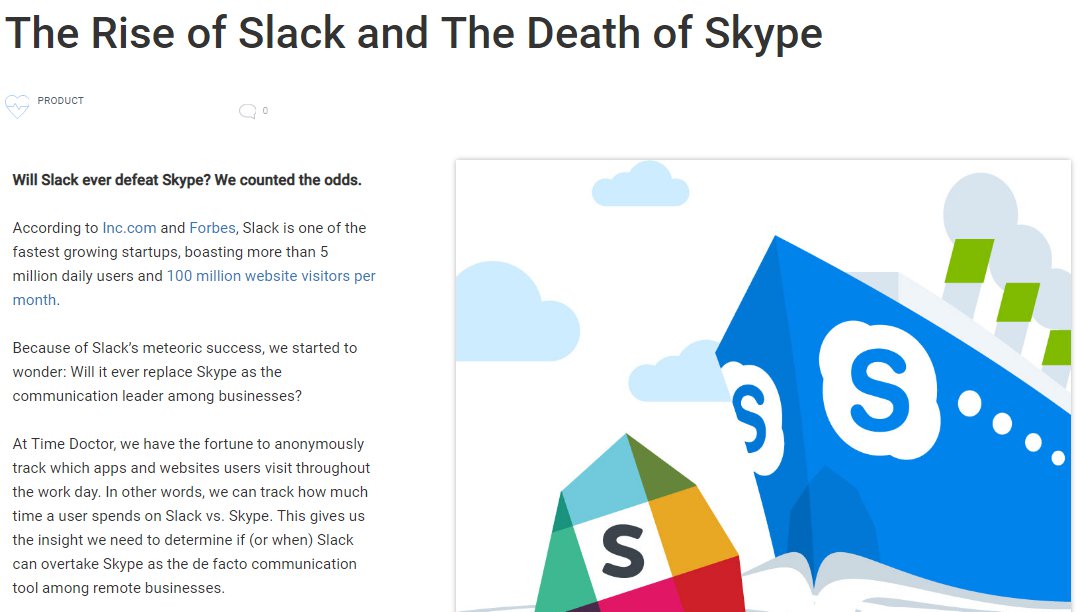
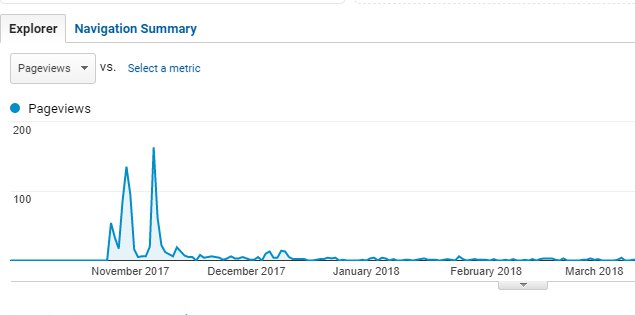
"Clever" takes on industry trends. Traffic spikes for one or two days then collapses to zero. No keyword targeting, no compounding growth, no trials generated.
Content targeting what buyers are already searching for. Traffic builds month over month. Every visit is a potential trial. Revenue follows rankings.
Writing what you think is interesting and writing what your buyers are searching for are almost never the same thing. The moment we made the switch, everything changed.
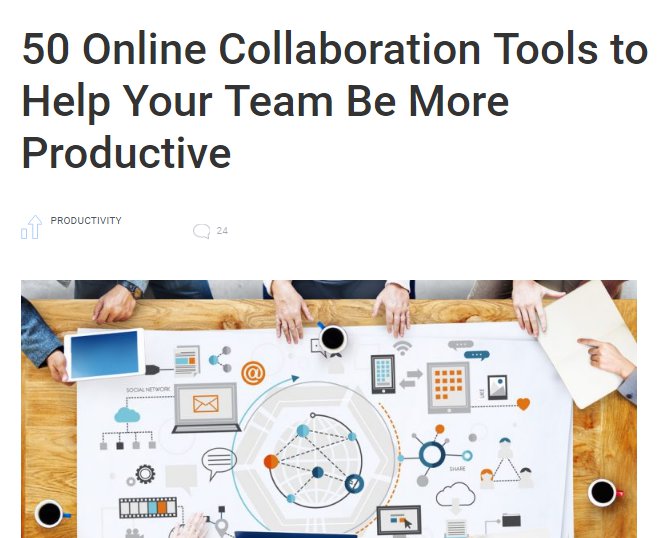
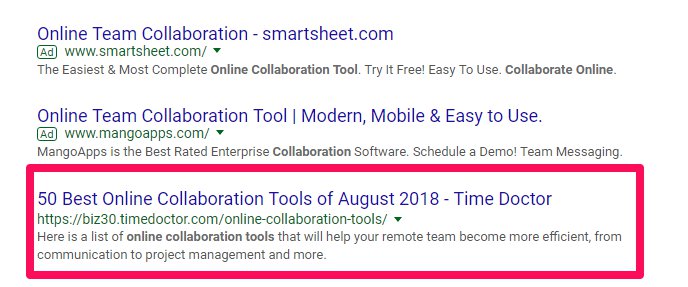
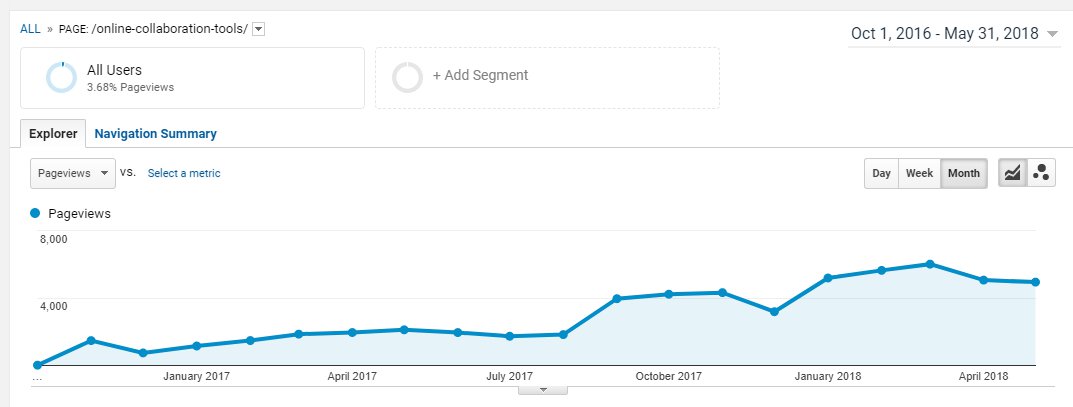
So we stopped writing for imaginary virality and started writing for real search intent. Our first real test was a post called "50 Online Collaboration Tools to Help Your Team Be More Productive." We promoted it, built some links, and ranked #1 for "online collaboration tools" and "collaboration tools." Instead of a spike and a crash, traffic built steadily month after month.
Step 1: Find the Right Keywords Not the Biggest Ones
The perfect keyword isn't the one with the highest search volume. It's the one that attracts qualified buyers people who have money and need your product.
After a lot of trial and error, we found that "tools" posts were consistently the best format for attracting ready-to-buy prospects. Here's why:
- People searching for tools are actively evaluating their options they're close to a purchase decision
- The search intent is explicit they want recommendations, not just information
- We never write "free tools" posts because that attracts tire-kickers, not buyers
Talk to Your Customers First
Before we opened a keyword tool, we talked to customers. Not a survey. Real conversations. Three questions we always asked:
- What tools do you and your team use right now?
- What was the last software you purchased, and what are you using it for?
- What tool are you using now but looking to replace?
From those conversations, we learned our customers were using Google Docs, Asana, Invision, and other tools for remote collaboration. That gave us a real-world category to investigate "collaboration tools" rather than guessing at keywords from inside a spreadsheet.
What Good Keyword Metrics Actually Look Like
When we plugged "online collaboration tools" into our research tool, it showed us three things we cared about:
- High cost-per-click which signals commercial intent. If advertisers are paying to reach these searchers, they're buyers.
- Solid search volume enough to be worth the investment
- Manageable keyword difficulty competitive but achievable given our domain authority
A keyword with 50 monthly searches that attracts qualified buyers is worth more than a keyword with 50,000 monthly searches that attracts people who'll never become customers. Volume is a vanity metric. Buyer intent is the only metric.
Step 2: Create Content That Is Genuinely Better
There's a saying in boxing: if you want to beat the champ, you have to knock him out. Same is true with SEO. If you want to rank above the incumbent, you need to create something better not just different.
For our "online collaboration tools" post, we audited every piece of content in the top 10. Lists of 9 tools. Lists of 20 tools. Most had screenshots, short descriptions, a table of contents here and there. Good content, not great.
We didn't write a "Top 10" list. We built a post that was clearly better across four dimensions:
More than double the depth
We listed 50 tools more than double the next-largest list. More isn't always better. But in this case, a clearly larger, more comprehensive resource sent a signal to both readers and search engines that this was the definitive reference.
Comprehensive write-ups for every tool
Every tool got a real review. Not a sentence. A genuine description of what it does, who it's for, and why someone would use it. Our post ran over 4,000 words not because longer is better, but because thorough is better.
Categorized structure with a table of contents
We grouped the tools into categories and added a clickable table of contents at the top. Only one post in the top 10 had this. It's a user experience improvement that also signals document structure to search engines.
Screenshots for every tool
Every tool had an image. This matched the standard set by the best posts already ranking and then we made sure every other improvement stacked on top of it.
None of these four improvements work in isolation. A long list with no write-ups is useless. Images without depth are useless. The sum of all four that's what made the post rank and stay ranked.
Step 3: On-Page SEO The Basics That Still Matter
In some industries, on-page SEO is a finishing touch. In competitive SaaS categories, it's table stakes. Every post we were competing against was well-optimized. Skipping this step would have cost us the ranking before we even got started.
The on-page elements that actually moved the needle for us:
- Clean URL containing the target keyword not date-based or keyword-stuffed, just clear and descriptive
- Keyword in the H1 title so search engines immediately know what the page is about
- Dynamic title tag with the current month and year using Yoast's
%%currentmonth%%and%%currentyear%%variables kept the title fresh and dramatically increased click-through rates - A written meta description with the keyword toward the beginning, not left to Google to auto-generate from the first paragraph
The dynamic date in our title tag was one of the highest-leverage tweaks we made. Nobody wants to click on a "best tools" article from two years ago. Showing the current month in the title signals freshness before they even click and that directly increases your CTR, which feeds back into your rankings.
Step 4: Promotion Let the People You Mentioned Do Some of the Work
Publishing great content and waiting for it to rank is not a strategy. You need to get it in front of people and a tools post gives you a built-in distribution list: every company whose product you included.
We emailed every tool we mentioned. Not a pitch. A genuine heads-up that we'd featured them and an invitation to weigh in.
Subject: Hey [first name], we mentioned you
Hey [first name],
I was doing research on tools that [customer profile] use when I came across [tool name].
After doing a bit of research, I couldn't wait to add it to the blog post I've compiled.
Here's a link: [URL]
Feel free to let me know if there's anything you'd like our readers to know about [tool name].
Cheers,
Greg
The response rate was high. Some companies wanted to add more information about their product. Others just tweeted the post immediately. Either way, we had earned distribution from people with a stake in seeing the post succeed without paying for a single ad.
Step 5: Link Building Less Than You Think, More Strategic Than You'd Expect
Here's something most agencies won't tell you: for a well-built tools post, you often need fewer links than you think. We typically needed 3–5 targeted links to land a page-one ranking for a mid-competition keyword.
For "online collaboration tools," the competition was steeper so we needed more. But the principle was the same: a small number of high-quality, relevant links on real sites your buyers read is worth more than a hundred links from irrelevant directories.
Why Most Outreach Fails
Bloggers have very little incentive to link to a stranger. If their post is ranking, they don't need your help. If it's not ranking, editing it probably won't help either. The only reason someone links to you is one of three things:
- You add something that makes their post better fixes a broken link, updates outdated info, adds genuine value
- They see you as a potential collaborator, and this link is the first step
- They already know you
Our outreach focused on number one leading with what we could do for them, not what we needed from them.
The compounding effect no one talks about: our "online collaboration tools" post earned 5 or more additional backlinks every month without any outreach. People just linked to it. A great post that ranks attracts links on its own. That's the flywheel. You earn the initial rankings with outreach; you maintain and extend them because the content is genuinely worth linking to.
The Result: $1M to $10M ARR
Over six years with no VC funding and a marketing budget that had to justify itself in trials and demos SEO content became the core acquisition channel for Time Doctor's growth.
The playbook we ran at Time Doctor is the same playbook we bring to every client at Content Guppy today updated for 2026, where AI search has changed what "winning" looks like, but the fundamentals remain the same: find what your buyers are actually searching for, create the best resource that exists, build the authority signals that get you to page one, and measure everything against one question: is revenue going up?