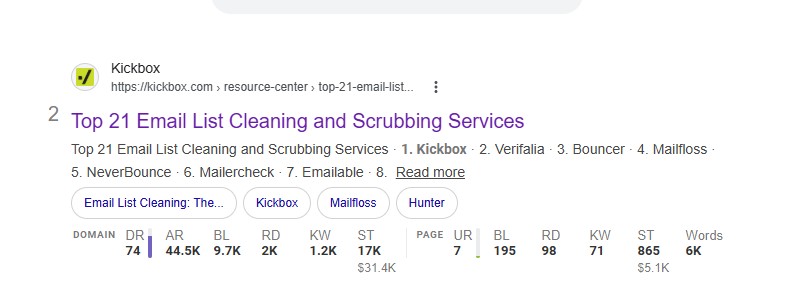
About 18 months ago, one of our clients, Kickbox, came to us needing to rank a foundation keyword.
It's one of those keywords that you know that if you rank for it, you know you're going to drive revenue for years to come.
After we deployed our content writing process, we aggressively built links to help rank the page and increase the overall brand awareness to the company.
Fast forward 18 months, and here's the results.
Kickbox fluctuates between position 1 and 2 in the SERPs.
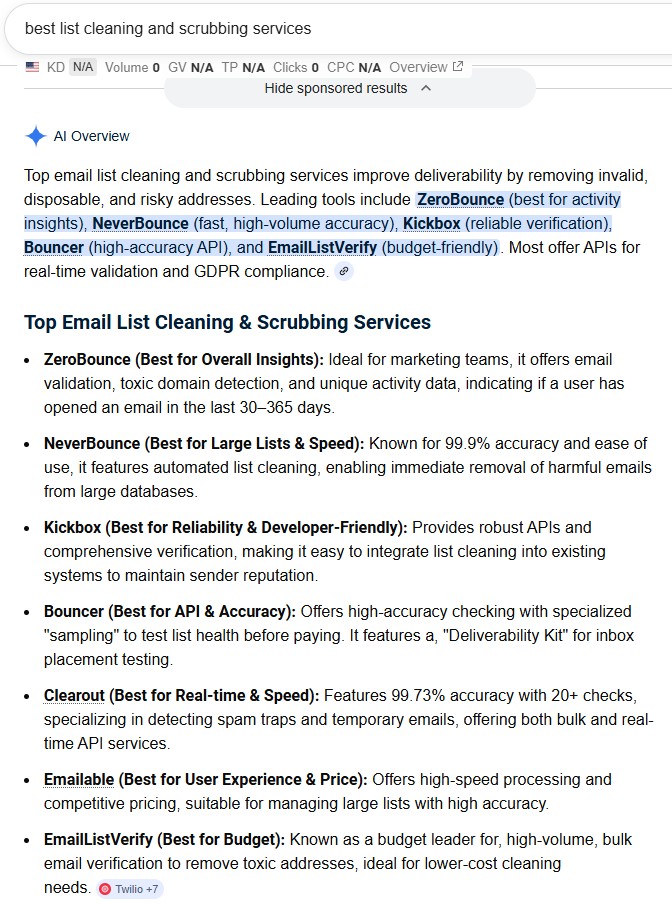
It's recommended in the AI Overview under the same keyword.
And best of all, because we don't really care about traffic, and rankings, the page converts 2.2% of all visitors into paying customers.

Back in 2019, a link builder had one job: rank content in Google.
In 2026, it has three:
- Rankings
- Brand visibility
- AI recommendations
I'll go into more depth into these three jobs in a second.
What makes a good link
Not all links are equal.
When we started Content Guppy, we knew that we wanted to get the best links possible.
At the time, that meant every link needed to meet these three criteria.
- DR 60 or above. We want real domain authority. Some of our links include Qualtrics (DR 91), Glassdoor (DR 91), and Dribbble (DR 93).
- Minimum 1,000 organic visitors per month. Real traffic signals to Google that the link comes from a trusted, active source.
- SaaS and B2B sites only. No link farms, content farms, or affiliate sites.
But we've recently added a few more criteria to the list:
- Where is the majority of the site traffic coming from? Many of our US clients want to make sure that most of the site's traffic comes from the U.S.
- What keywords is the site ranking for? Are they keyword related to the overall topic of the site? Or is a martech company ranking for a keyword about "best doctors in the world"?
- Does the site have spam content?
- What's the UX of the site like? Are there Adwords on the site? Does it look like it was made in 2006?
Now that you know what makes a good link, let's talk about what that good link needs to do.
The three jobs a link has to do
Rankings: High-DR contextual links push your content up the SERP. This hasn't changed.
Brand visibility: Every link is a brand impression. The more your brand appears across trusted sources, the more Google and AI systems associate you with authority in your category.
AI recommendations: A 2025 Ahrefs study found that branded web mentions were the highest-correlating factor with appearing in Google's AI Overviews.
Tip 1: Link Insertion for SaaS Companies
Link insertion is the act of reaching out to other websites in hopes that they will add a link to their already existing content. And it's one of our favorite ways to do SaaS link building.
This is the exact process we use most often to find and acquire some of the best links for our clients.
Here’s how it works.
Source Articles
One of the most important aspects of any link building strategy is to find a list of sites who might want to include our link in their article.
To do that, we use Ahrefs Content Explorer.
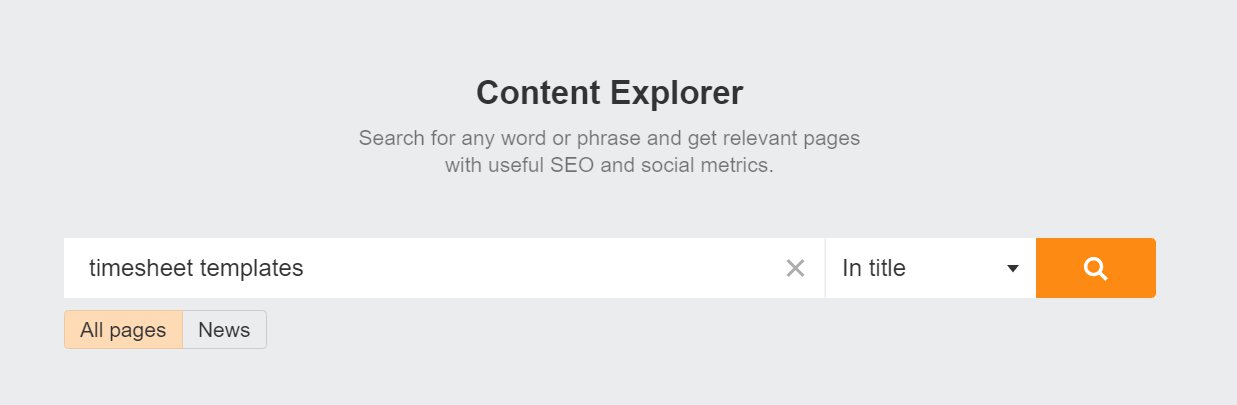
Then we apply all of our filters.
These are:
- One page per domain
- Exclude Home Page
- Site Traffic 1000
- Domain Rating from 60-90
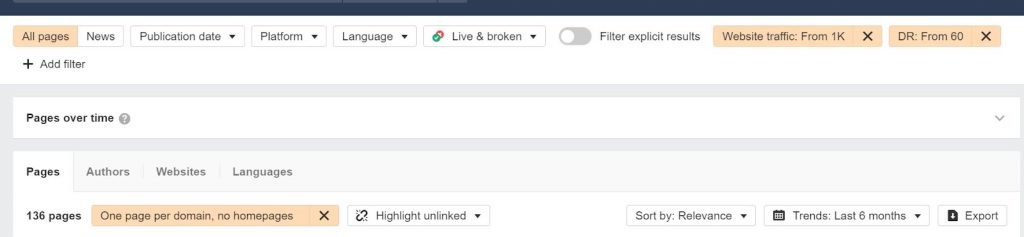
Then we export the list.
Find Person Closest to the Content
Now we have to find the person to reach out to.
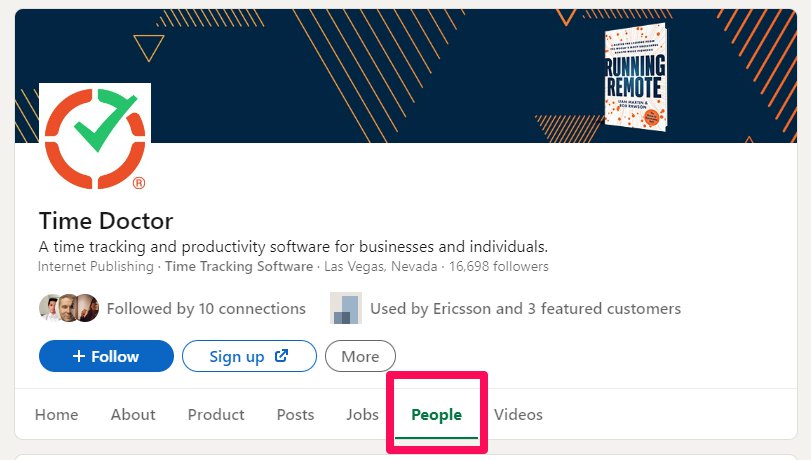
We use LinkedIn to do this.
And that’s because we want to get the person closest to the content. We don’t want to send our pitch to the CEO or Founder or CMO if we don’t have to. These people don't care about your link building campaign.
Instead, we want to send our pitch to the SEO manager or the content marketing specialist.
So you can search the companies, and then go to the “people” tab.
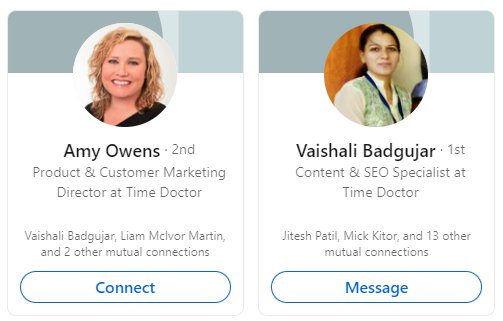
And then you want to find people with “Content” or “SEO” in their job title.
Send a Pitch
Now, it’s time to send your pitch.
Three things:
Make it personal. Use their first name at all times.
Show that you’ve ACTUALLY read the content. This is important. (Actually read the content!)
Ask for the link.
Here’s an email that worked for me.
Subject: Quick Question
Hey Victor
was reading your article on the 6 ways your B2B Business Can Establish Trust with Your Prospects.
You mention creating content marketing assets as one of the ways to create trust. Far too often, brands think they can just buy some ads on Facebook or Google or whatever, and see success.
But I can't tell you how many times a customer has said to us "we've been reading your blog for 2 years."
The other idea that you had which is really good is making it easy to contact the brand. If I can't find a way to get in touch with someone, then I'm not buying.
We wrote a post called "how to set up a call center" that can help companies make it easy for their customers and prospects to reach out to them. It will fit perfectly in your article.
Let me know if you’re interested.
Greg
When it comes to link building, contextual link insertion is one of the most scalable ways to acquire links.
It's the fastest way to increase organic traffic.
Tip 2: Guest Blogging
In 2008, when I started my first blog, guest posting used to be my primary traffic strategy.
I’d write a guest post on Copyblogger or Problogger and get thousands of visitors and hundreds of email subscribers. The benefits of organic traffic I'd get from a link on those sites was an after thought.
Man, I miss those days.
These days, guest posting is best served as an effective link building strategy.
And beyond the link, it's one of the best ways to spread your point of view across the web.
Every guest post is a chance to put your take, your framework, your opinion in front of an audience that hasn't heard it yet. The more places your POV lives, the more Google and AI systems associate your brand with authority on that topic.
For guest posting, I would highly recommend using what you learn in this section and implementing it with a solid Listicle Guest Post strategy.
AI systems are trained to surface authoritative, differentiated sources. When your point of view appears consistently across trusted publications, it signals to both Google and LLMs that your brand is a credible voice in your category. Guest blogging is one of the most underrated ways to build that signal.
Step 1: Find a blog to write your post
So, the easiest way to find a blog to write for is to use Google.
You can simply enter the terms:
- “Name of niche” and “guest blogger”
- “Name of niche” and “write for us”
- “Name of niche” and “guest writer”
And you’ll wind up with dozens, if not hundreds, of blogs who are accepting guest posts across different niches and topics from health and nutrition to technology and marketing.
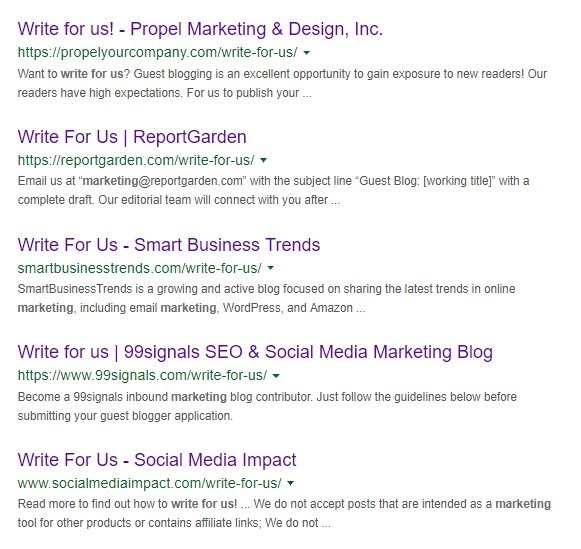
For instance, if I type in “Marketing” and “write for us”, I get pages and pages of blogs looking for guest posts:
Apart from this, you can get authority guest posting sites from curated lists such as Attrock guest posting sites to prepare the best list of guest posting sites according to your niche.
Step 2: Pitch the editor
Now that I’ve found a blog to write for, it’s time to pitch the editor. That’s how link-building strategies mirror the meticulous scheduling precision needed in health roster systems.
The first thing I do is look for blog posts that have been successful and come up with an idea around how to spin a new angle.
For instance, if I notice a blog post called “10 ways to nurture leads” gets a lot of shares and comments, then I might do something like “A Case Study on How I Nurture Leads”. (Totally made up and a bad example, perhaps, but you get the point. I’d write my article around lead nurturing.)
Then, I’d pitch them using this script.
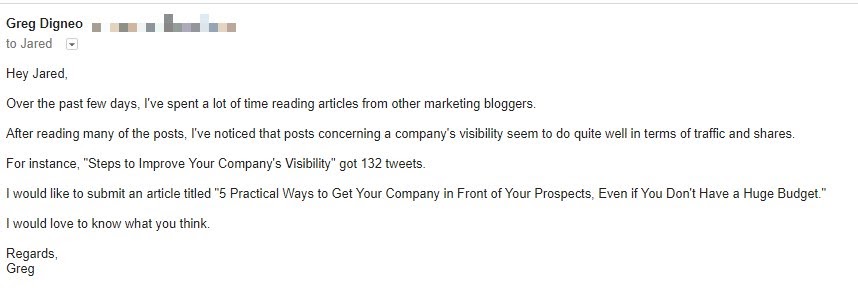
And it works almost all of the time!

Step 3: Write a killer post
Now it’s time to write a killer guest post. It has to be really good! You want to endear yourself to both the readers of the new blog AND the editor of the blog.
You can go the extra mile of adding a couple of images to your post, this is an easy step with mockups.
You may not get tons of traffic from your guest post, however, if you do good work for them, they will be much more inclined to share a future post or partner with you down the road.
Tip 3: Guest Podcast
Let's face it.
Guest posting at scale can take a LONG time. Writing blog posts can take hours. Then a few rounds of edits. Before you know it, you've spent 7 to 10 hours on one guest post.
Enter guest podcasting.
It takes 15 minutes to write your pitch. An hour at most to be on the podcast. You save time compared to a guest post AND you got your link. Not to mention you've been in the ear of your target audience for almost an hour. That's worth something too.
But beyond the link and the exposure, podcasting is one of the most powerful things you can do for AI recommendations right now.
So here’s how to do it:
When you record a podcast, you are creating a transcript that describes your brand, your product, your customers, and your use cases in natural conversational language. That is exactly the kind of content AI systems are built to understand. A keyword-stuffed blog post tells AI what you do. A podcast transcript shows AI how you think, who you help, and why customers choose you. That context is what gets you recommended, not just cited. No other link building tactic creates that kind of AI training signal as a byproduct.
Step 1: Find a Podcast to Appear On
You can do this a couple of ways.
The first way is by using Google.
Look what happens when I search for “best marketing podcasts”.
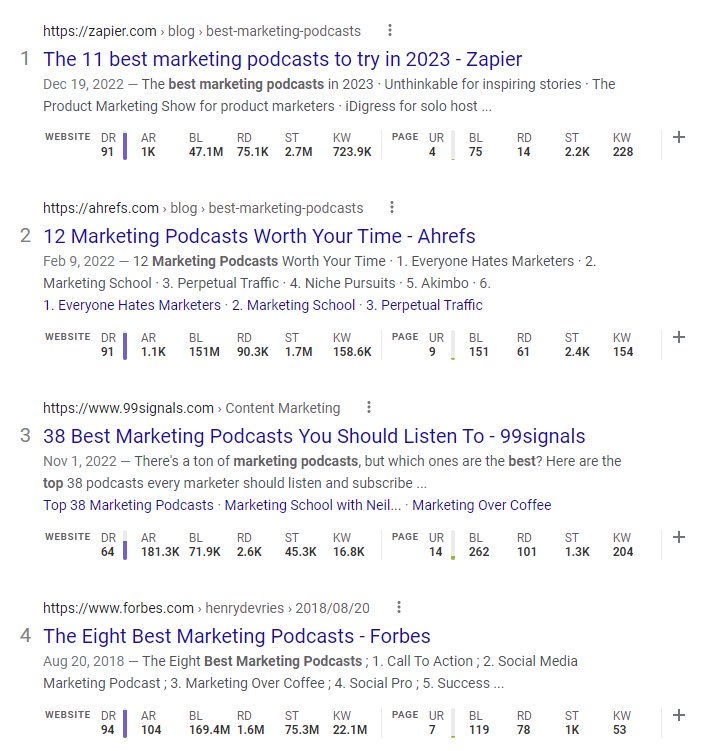
I get a ton of “list posts” about marketing podcasts.
Then I can click on each of these lists to see which podcasts work for my business.
The second way to do this is by going through the podcasts that you already listen to.
If you’re listening to these podcasts, then maybe your customers are as well.
Step 2: Identify Gaps
Once you’ve found the podcast that you’re going to pitch, you need to identify the content gaps that you can fill.
With a podcast, you don’t want to pitch the EXACT SAME THING as someone else. The topic has already been covered.
You need to pitch something that is a bit different - an angle that will appeal to the host and the readers.
For instance, I was pitching the “Everything is Marketing” podcast. And they had a few episodes on SEO.
So I knew SEO would be a good topic. But I needed to find a bit of an edge.
I pitched the podcast on an SEO strategy that would take just 30 minutes per day.
Step 3: The Pitch
Now you need to send your email.
Here’s the email I sent to the “Everything is Marketing” podcast.
Hey Corey
I was listening to your podcast episode with Benji Hyam where you guys were talking about creating a bottom of funnel content using Alternative Posts.
LIke you said, they convert like gangbusters! This is such a great strategy that I’ve seen make a significant impact for other companies. Thank you for sharing this valuable tactic that more people should be utilizing to get ranked for their competitor’s alternatives.
Because you do such a great job of teaching your audience how to grow their business through practical marketing strategies, I thought they would also love to know how to create a huge boost in visitors through an seo strategy that just takes up just 30 minutes each day.
I’ve also found a really cool keyword strategy that helps me create content “easily” which I could share too!
Are you interested?
Thanks,
Greg
Tip 4: Listicle Guest Posts
This is the most important link building tactic in 2026.
A listicle guest post is a best-of or top-tools article you write and place on a third-party publication. Something like "Best Email Validation Tools" or "Top 10 Alternatives to [Competitor]" published on a high-authority site your ICP reads.
The outreach process mirrors guest blogging exactly. Find high-authority publications in your niche, pitch the editor with a specific listicle angle, and write something their audience will actually find useful.
LLMs pull heavily from listicle-format content when forming recommendations. When someone asks ChatGPT "what's the best email list cleaning software," it's not pulling from your homepage. It's pulling from best-of lists across the web. If your SaaS is not on those lists, on your own site and on high-authority third-party sites, you are invisible to a growing portion of your buyers before they ever reach Google.
But the reason this tactic gets its own section is what it does for AI recommendations.
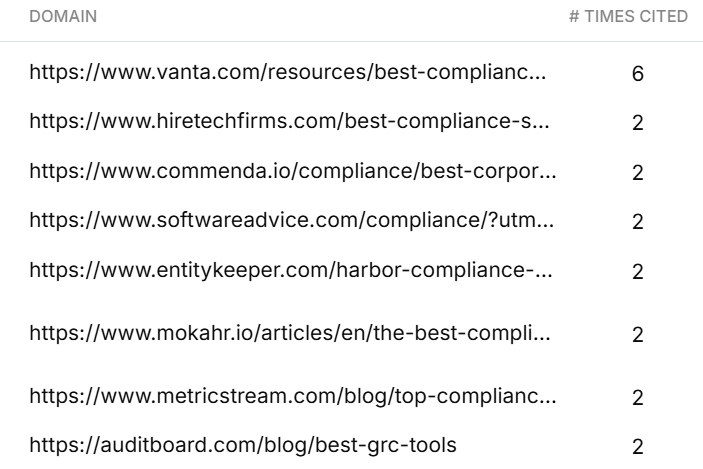
For instance, when you see where most recommendations of any topic come from (in the case below "best compliance software", you'll find that the most cited and referenced content are listicles.
Tip 5: Get Featured in Existing Listicles
5. Get Featured on Existing Listicles
This is different from writing your own listicle guest post. That's Tactic 4. This is finding listicles that already exist, already rank, and already get read by your buyers, and getting your SaaS added to them.
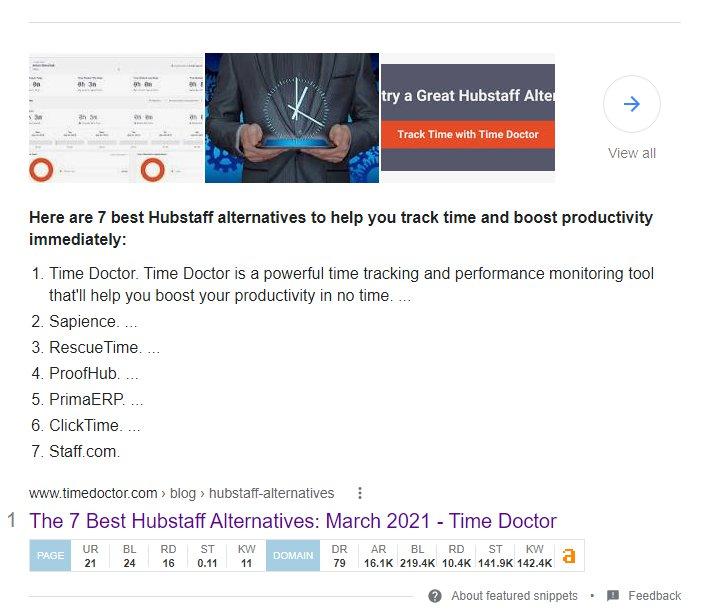
The opportunity is everywhere. Go to Google and search "best CRM software" or "top time tracking tools" or "best email validation tools."
You'll find dozens of roundup posts on high-authority sites that are already sending traffic and influencing buyers every single month.
Your job is to get on those lists.
Listicles on high-authority sites are exactly the kind of curated, trusted sources that AI systems reference when forming recommendations. Getting your SaaS featured on an existing best-of list puts your brand in a context that signals category authority, which feeds into how LLMs understand what your product does, who it helps, and when to recommend it.
Here's how to do it:
Step 1: Find the right listicles. Search for "best [your category]" and "top [your category] tools" in Google.
Filter for DR 60+ sites. Look for posts that are actively maintained and recently updated. If a post hasn't been touched in two years, the editor probably isn't responsive.
Step 2: Check if you're already on it. If you are, move on. If you're not, it's a pitch opportunity.
Step 3: Pitch the editor. Keep it short. Tell them who you are, what makes your product different from the tools already on the list, and why their readers would benefit from knowing about you. Don't ask them to remove a competitor. Just make the case for why you belong.
Something like:
Hey [name],
I noticed your roundup of the best [category] tools. We weren't on the list and wanted to introduce you to [Product].
We're different from the other tools you've listed because [specific differentiator]. Happy to send over more details or a trial account if that would help.
Step 4: Follow up once. Editors are busy. One follow-up after a week is appropriate. More than that and you're burning the relationship.
Let's be real. Site owners are realizing how valuable listicles are becoming. Especially the ones that rank in the top 20. You're going to have to pay in some way. Most of the time it's in cash. Sometimes it'll be with a reciprocal link on a listicle on your site.
Tip 6: Create Linkable Content
One of the “easiest” ways of building links, is to create content that people want to link to.
Unfortunately, this is incredibly subjective, so it’s really hard to tell you step by step how to do this.
But here are some tips on what I’ve seen work.
Use Original Data
People love to link to original data and research.
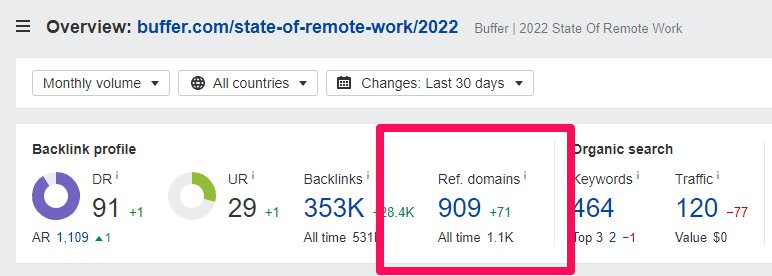
For instance, every year, the social media company Buffer creates a State of Remote Work Report.
In the 2022 report, they got data from over 2,000 remote workers.

And this post has received over 900 links.
AI systems are specifically built to surface content that includes statistical claims with cited sources. Original data gives LLMs something concrete to reference. When your research gets cited, AI systems learn to associate your brand with authoritative, data-driven content in your category. That's one of the strongest AEO signals you can build.
Beautiful Design
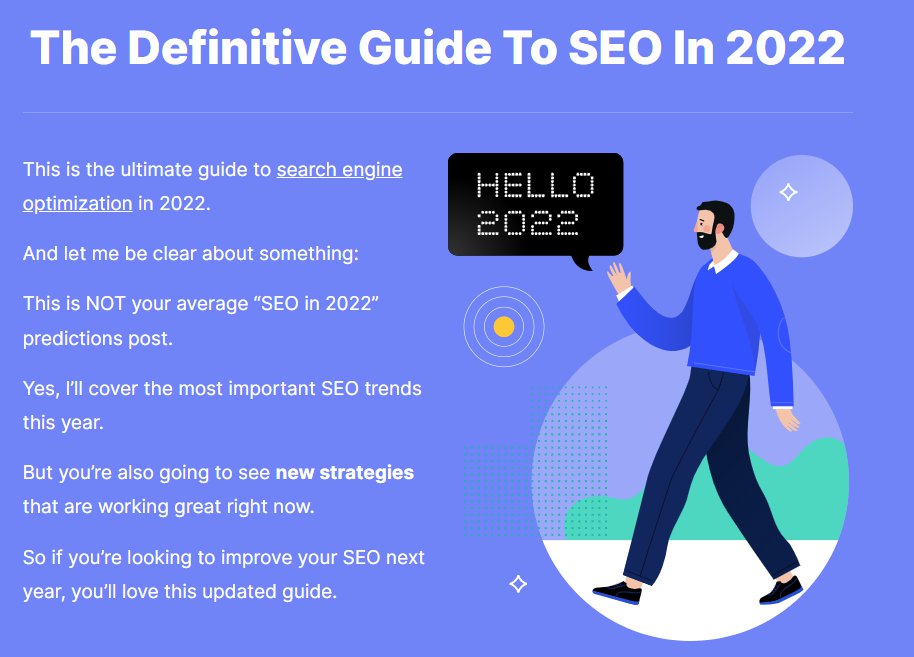
Backlinko created The Definitive Guide to SEO in 2022.
One of the reasons it was so successful is that he spent a lot of time and money on the design of the post. Here’s the first section.
(Note: There’s a lot of reason’s this post is successful, design is one of them)
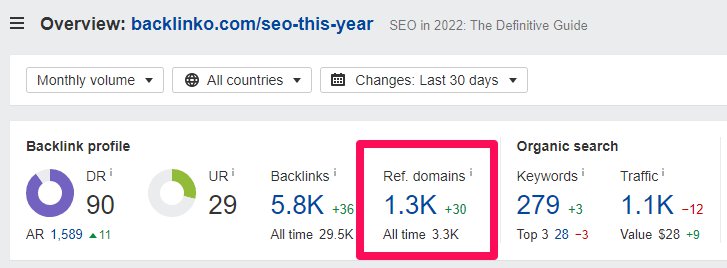
To date it has 1300 referring domains and a lot of quality backlinks.
A strong, defensible point of view
People link to content that challenges the conventional wisdom. They share things that make them think differently about a topic. Generic how-to content gets ignored. Opinionated, specific takes get cited.
My own point of view, for instance, is that SEO in the future is going to be about getting in front of other people's audiences with your own perspective.
Not just publishing on your own blog and waiting for Google to rank it. But getting onto podcasts, into newsletters, onto other people's YouTube channels, into listicles on sites your buyers already trust.
That's a specific take. You can agree with it or push back on it. Either way it's more citable than "create high quality content."
What's your company's point of view on the problem your product solves? What do most people in your category get wrong? What would you say if you weren't trying to please everyone?
AI systems are trained to surface authoritative, differentiated sources. Generic content that sounds like everything else gets deprioritized. A strong, specific point of view that only your company could have made is exactly what LLMs are built to cite. The more consistently your POV appears across trusted publications, the more AI systems learn to associate your brand with authority in your category.
Tip 7: Integration Partner
When it comes to SaaS link building, one of the best, and under utilized link building strategies is to build integrations with other tools.
This allows us to leverage partnerships with those other companies to drive relevant traffic to our site AND rank service pages in search engines.
For instance, one of the tools we work with is called WorkflowMax and we are listed on their integration page.
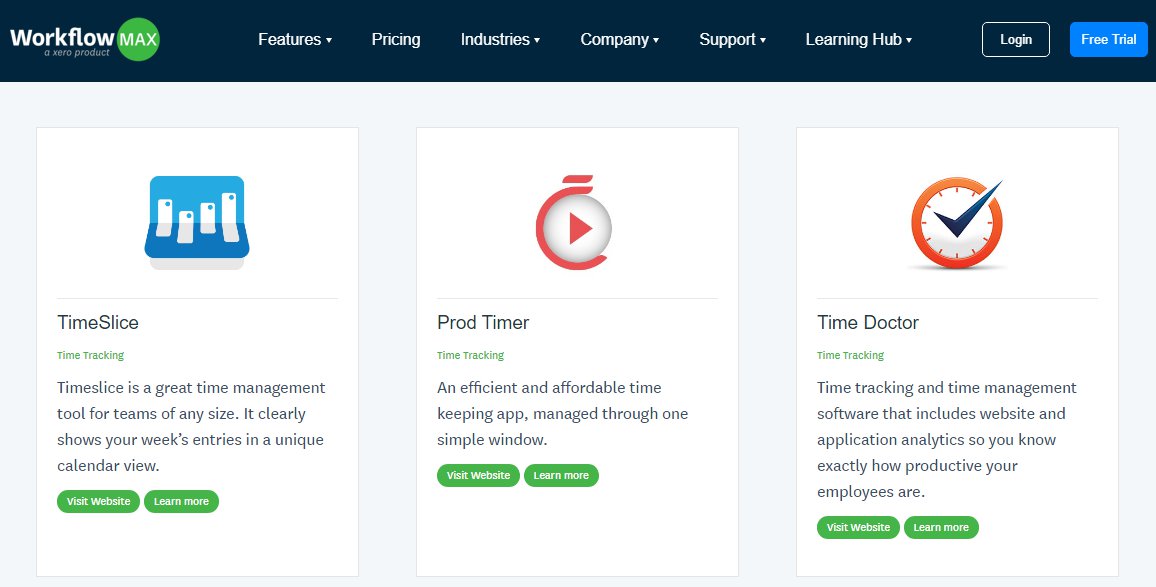
In the past 6 months, that integration page has sent over 265 people to the site. Any traffic that comes from search engines is just gravy.
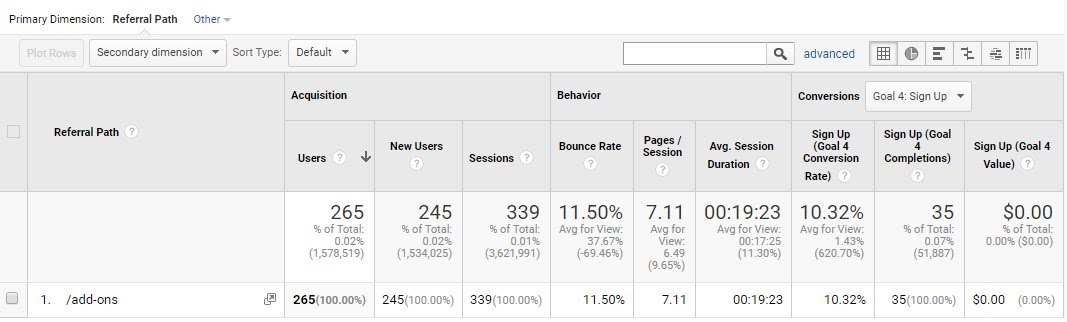
This is just one partnership. Multiply that by 10 or 20 and traffic starts to add up.
This strategy is exclusive to link building for SaaS companies.
Integration pages are one of the most common sources buyers reference when asking LLMs questions like "does [your tool] integrate with [other tool]?" Being listed on a partner's integration page means you get cited when AI answers those questions. It is one of the most natural and defensible AEO signals available to a SaaS company.
Final Words
There you have 7 highly actionable link building strategies that are guaranteed to get you incredibly high quality links.
We build hundreds of links for SaaS companies every single month. If you’d like us to do some link building for you to increase your SEO and brand authority, feel free to get in touch.
We do this for B2B SaaS companies every day.
Book a free strategy call. We will look at your category, identify high-leverage opportunities, and show you what a content program built around your revenue goals would look like.
Book Your Free Strategy Call